Friday, November 21, 2014

A Poem for the Lost

The vicious slayings in Har Nof this week have left me very shaken, as they have many of us. I had a personal connection with Rabbi Kalman Levine, and Rabbi Moshe Twersky was my rebbe's brother. Everything about this tragic incident raises questions and touches nerves in a way that other attacks have not (at least so is the case for me). The way that these men had sacrificed to move to Israel, the fact that among them were tremendous talmidei chachamim (Torah scholars) who were known for their personal and spiritual character. The way they were killed in a shul, while they prayed, and in such barbaric fashion. o.

The image of the arm of one of the murdered, still wrapped in tefillin straps recalls the verse from Isaiah that men say when finishing to wrap their tefillin: n
וארשתיך לי לעולם וארשתיך לי בצדק ובמשפט ובחסד וברחמים וארשתיך לי באמונה וידעת את השם 
In G-d's voice- And I will bind you to me for eternity. And I will bind you to me with justice and order. And I will bind you to me with faith, and you will intimately know G-d. d


To work some of this out for myself, I wrote this poem. Maybe it will resonate with some others, as wello


וילכו להם


וילכו להם בניך

ממולדתם ומבית אביהם הלכו להם
אל הארץ אשר הוֹרַשתָם הלכו להם

בתמימות לפניך הלכו להם
על דרכך אשר שמרו לעשות צדקה ומשפט הלכו להם
ואשר עליו ציווּ את בניהם ואת בֵּיתם אחריהם הלכו להם

וישכמו בבוקר בניך
ויאמרו אל נעריהם ואל נשיהם שבו לכם פה
ואנו נלך עד כה ונשתחוה ונשובה 
אליכם והלכו להם

ואל המקום אשר עמדו שם את פני ה׳
על אחד ההרים הלכו להם
ויקראו בשם ה׳

וישאו בניך את עיניהם ויראו
והנה שני אנשים
נצבים עליהם בפתח האוהל
ויקחו האנשים בידיהם האש והמאכלת
וירוצו 
האנשים 
אל בניך

ויעמדו בניך
כאילים
נאחזים
בּסְבַך בקרניהם
ויפלו על פניהם
ויאמרו אליך
”אבינו!“
כי יראי א-לקים הם

ולא חשכת את בניך אשר אהבת מהם

וישלחו האנשים את ידיהם
ויקחו את המאכלת
לשחוט את בניך
ויתעלו בניך שם לעולה

וילכו להם

ותֹּאמֶר, “הנני בָנַי“

JewBrain Tinier

Sunday, July 6, 2014

Han'arim: A Song for Our Lost Boys

Only one week ago, last Friday night after our Shabbat meal, I was putting my son to sleep. He was sad about something—I don't remember what—and I was sad, too, thinking about our missing boys and hoping that they would be found alive. I wrote this song there in his room, to comfort us both, and as a prayer for my son, for the boys, and for all of the Jewish people in anguish and despair. Now that our worst fears have been realized and the missing boys, Naftali Frankel, Eyal Yifrach and Gilad Shaar, are dead, I offer the song with the hope that their holy souls be bound with the souls of the ever-living, and that their families and all of us find comfort in the rebuilding of Jerusalem soon and in our days.


JewBrain Tinier

Friday, May 16, 2014

60,000 What??

The JewPsy blog has reached 60,000 hits! But what's so special about 60,000?


Men in hard hats posing in front of a sculpture of the number sixty thousand
This photo has no relevance at all other than the big, red
60,000 with which these fellows are inexplicably posing.
Well, imagine that. You all have visited this blog sixty thousand times! Which doesn't really mean all that much because, to be honest, 60,000 is not a particularly significant number. It's not the flashy 50,000, and it's less than plenty of downright boring numbers (60,001 being just one of infinite examples). But 60,000 is still a nice, round number, and that's a good enough reason for me to allow myself to share a little high-five with you (yes, and you too). While we're at it, though, here's a little 60,000 trivia that you may find, if not
useful, then at least marginally interesting.
60,000 is:


  • The number of Legos it took to build a scale model of Vatican City last week in Summit, NJ. The model, built by the 5th and 6th graders of Oak Knoll School of the Holy Child took up 400 square feet of the school gym. 
  • The number of people who sang Bohemian Rhapsody together while waiting for the start of a Green Day concert in London's Emirates Stadium in June. (I know, right? Green Day still selling out stadiums?) That just shows you the dangers of prolonged exposure to heat, boredom, and claustrophobia. Watch the video after the bump:

Thursday, May 8, 2014

Are We Listening?: Women Singing, Orthodox Rabbis, and Israel's Religious-Secular Divide

R' Lichtenstein accepting the Israel Prize

They say it 'aint over til the fat lady sings, but maybe we should lower the curtain before she even starts. This week, on Israel's Memorial and Independence Days, the chief rabbi of Tzfat (Safed), Rabbi Shmuel Eliyahu and Rosh Yeshiva (dean) of Yeshivat Har Etzion, Rabbi Aharon Lichtenstein both participated in public ceremonies that involved "kol isha," (lit., a woman's voice), the halakhic term for women singing. Rabbi Eliyahu delivered his opening remarks and then got up and left, while Rabbi Lichtenstein stayed for his entire ceremony, looking honored to be there. Rabbi Amnon Bazak, an outspoken lecturer at Har Etzion, addressed these contrasting approaches in a short but poignant essay today. Below is an English translation followed by the original Hebrew.

Friday, May 2, 2014

Blogging Rabbis and the Unfolding Future of Orthodox Judaism

As rabbis have increased thier web presence, the discourse about halacha and contemporary religious issues has started to move online, too.  Shulem Deen, editor of unpious.com, discusses the history of Orthodox Rabbi-run blogs, thier impact on Modern Orthodoxy, and the Ultra-Orthodox response:

Thursday, May 1, 2014

R' Aharon Lichtenstein profiled in advance of receiving Israel Prize

Who Is Aharon Lichtenstein? » Mosaic Magazine

"To those... who are acquainted with or have been touched by [Rabbi Lichtenstein's] life and work, this award, to be conferred on May 6, Independence Day, will signify one of those rare instances when government committees get things right."
JewBrain Tinier

Friday, April 25, 2014

Holy Schlissel?

Teacher holds boy's hand on first day of school
If it's the first Shabbos after Pesach, you know everyone's looking forward to their challah. You also know that someone, somewhere, is going to be going on about "schlissel challah" and inauthentic minhagim (ritual customs). Schlissel challah, literally key challah, refers to the key-shaped challah bread that many Jews bake on the first Shabbos after Pesach (many, place an actual key inside a normal loaf, instead). Many explanations have been suggested for this custom, including focusing awareness on the gates of Heaven that are believed to remain open during the month after Pesach, as well as a thanks and request for material sustenance (see article).

Monday, September 9, 2013

Teachers: Save the First-Day Freshness

Teacher holds boy's hand on first day of school
Happy first day of school!

There's something special about the first day of school, for students and for teachers, that's hard to replicate at any other time in the school year. Sure, it's a little hectic and a tad stressful, but that's all overshadowed by the wonderful freshness of the day. We're excited to see the kids and to have them enjoy the rooms we worked so hard on, and we're eager to throw ourselves into reaching our curricular and personal goals.

Wednesday, August 17, 2011

A Conversation With Rabbi Arele Harel

AN ORTHODOX RABBI EXPLAINS WHY HE IS PAIRING GAY MEN WITH LESBIAN WOMEN 

Time magazine yesterday posted an article and video about Rabbi Harel, an Israeli rabbi with a novel approach to addressing the dilemma faced by Orthodox homosexual men and women. In March, JewPsy wrote about Rabbi Harel's work in an extensive piece discussing the possible merits of his approach for gay Orthodox Jews who are committed to their communities and halacha, Jewish law ("A New Proposal: Gay Marriage, Orthodox Style"). Harel plans to unveil his online match-making service for Orthodox gay people this September. "This is the best solution we can offer people who want to live within the halacha," Harel says. "This may not be a perfect solution, but it's kind of a solution."

See the video after the jump (click "Read more")

Friday, July 22, 2011

Summer Camp 2.0

Reflections on Jewish camping in the age of social media


Seventies summer camp bunk photo
When I was growing up, going to camp meant putting my regular world in exile while I continued with life somewhere far away. There were no phone calls and if you wrote a letter you had to wait at least a week for a response. There was no email delivery and, even if cell phones were around, no kids were hiding them in their camp trunks. Children had a break from their parents and parents from their children.

My, how the bunkhouse walls have fallen.

Wednesday, May 18, 2011

Arrest of IMF Head Not So Good for the Jews

"Money, women, and the fact that I am Jewish": three barriers that Dominique Strauss-Kahn mused in a recent interview with the French daily Liberation would stand in his way despite his being the expected favorite for his country's upcoming presidential elections. Turns out one was all it took.

180 Sephardi Girls Shut Out From School

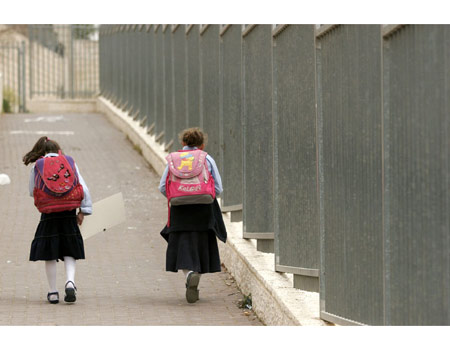
Old biases die hard; we Jews know that. But for Sephardi Jews in Israel's "ultra-Orthodox" Haredi community, discrimination and exclusion--by their fellow Jews--serve as regular reminders.

Ynet reports that 180 Sephardi students (students from Middle-Eastern descent) from Jerusalem have no spot in the city's Haredi school system for the 2011-2012 school year after the close of registration. This in addition to the handful of girls who are still without spots from the beginning of this year, and some from 2009. Critics accuse the schools of maintaining an unspoken quota of, at most, 30% Sephardi girls, and accuse the Jerusalem municipality of "washing its hands of the situation year after year, ...deny[ing] the existence of quotas" while doing all it can to support them.

Read the full story here
JewBrain Tinier
Published with Blogger-droid v1.6.8

Israeli Soldier, Killed in Yom Kipur War, Given a New Voice

Idan Raichel sets to music the young man's "letter home" more than 35 years after it was written


Israeli singer, songwriter and producer Idan Raichel wrote this song as a musical setting for a poem written by a young IDF soldier named Reuven Politi to his mother before his death in the Y"K war. (Lyrics are at the end of the post.)

Listen to the way Raichel wrote the verses in (modern) phrygian mode (you'll hear what I mean), evoking the intensity and fear of war, and switches abruptly to a major scale for the chorus (ironically, just for the words "We are not heros"), for a brief tinge of hope. All of that amplifies the exquisite pathos of the rest of the chorus as it moves into a minor scale as the narrator tries desperately to impress upon his mother the urgency of his message. Of course, knowing the mortal fate of that young soldier only makes it that much more heartbreaking.


Below is a piece from Israel's Channel 2 News (Hebrew) on the background story.


אמא, אבא וכל השאר
מילים: ראובן פוליטי ז"ל
לחן: עידן רייכל
וכשהלילה תם והשמש מאירה
התדעי אמא מה לעינינו נראה?
עצים סביב, רמי צמרת אך חרוכי גזע
בתים גדולים סביב אך הרוסים הם דהויי צבע
מהלך על הריסות אני, אמא
ותאמיני לי אין כאן שום אגס ואין כאן פרח

לא גיבורים אנחנו כי מלאכתנו שחורה
תשקע השמש, תבוא העלטה
ואז ננום בבגדנו במיטה
כן אמא, זה חשוב, זה קשה וזה נורא

בחיי שזה קשה אך אני נשאר
אפורה האדמה ושחור האופק
וכחול שמים כאילו משתהה והוא ממתין
ולא נוגע, הוא לא נוגע באופק השחור
ביניהם חלל, שום קשר וכל השאר
וזה קשה מאוד אך אני נשאר
יש כאן גדר תיל ואחריה חרב שלופה
אמא, אבא וכל השאר

לא גיבורים אנחנו כי מלאכתנו שחורה
תשקע השמש, תבוא העלטה
ואז ננום בבגדנו במיטה
כן אמא, זה חשוב, זה קשה וזה נורא

וכשהלילה תם והשמש מאירה
התדעי אמא מה לעינינו נראה?


JewBrain Tinier

Sunday, May 1, 2011

Life Lessons from a Coke Machine: The Ecstasy of the Unexpected

אז ימלא שחוק פינו

Unforeseen Delight

Have you ever been staggered with gladness? Have you ever been caught off guard by something small and ordinary but delighted by the sheer surprise of it? There's something particularly elating about the unexpected—a gift from a stranger, an unpredicted punchline, an unbelievable sports play, a playfully startled baby—that evokes within us joy and laughter unlike those from any other source.

Below is a promotional video from Coca Cola that shows various gleeful college students brought to laughter by a Coke machine. Coke's message, apparently, is that in some vague way Coke brings people happiness. Some might rightly point out that giving anyone something for nothing would make them smile. But I think the real power here is not what was given, but the unexpectedness of how it was done. I wonder with the author of A GeekyMomma's Blog, writes, "if the same machine doled out jokes, a handshake, or perhaps wrote a check to a non-profit organization, if the reaction might be very similar."

What do you think? Watch and decide for yourself:


What struck me most about my reaction to this video is how happy it made me seeing other people getting gladdened like this. And writing that last sentence made me realize how insufficiently our language includes references to making other people happy. In contrast, the root of Hebrew's most common word for happiness, שמחה, is regularly used as לְשַׂמִֵחַ for that purpose. This might reflect the ease of Hebrew conjugation, but this usage dates back at least to the Book of Psalms, and is firmly embedded within Jewish culture.) GeekyMom is taking this one step further with a delightful contest, where, starting today readers post videos to YouTube of themselves being "Happiness Machines" (á la the Coke machine) for a chance to win a Lenovo M90z computer (I kid you not!).


And Now for Something Completely Different: or Laughing All the Way to...

This kind of unexpected joy is what the sages, חז“ל call שְׂחוֹק, and it has an important mystical/eschatological meaning. This feeling was embedded into the our collective spiritual identity during the very birth of כלל ישראל (the Jewish people) in the person of יִצְחַק. When Sara, at 90 years old and infertile from youth, bore an unexpected son it was this distinctive delight that Avraham acknowledged with the child's name (the root of "Isaac" is similar to שחוק). This joy, Jews believe, will ultimately be revealed in its full form one day when the world joins together to serve Hashem. Then, אַז, when evil and darkness are be overturned abruptly and absolutely, G-d will be exalted, the world will be filled with the ecstasy of the unexpected, and we will be filled with joyous song. And in case you were wondering, that is what you've been talking about every week for all these years: אז ימלא שחוק פינו ולשוננו רנה.


All right, this post was kind of messianistic, but can you blame me? I mean, what do you think of when you see Coca Cola YouTube videos??

JewBrain Tinier

Sunday, April 24, 2011

The Great Adventures of Chol Hamoed

Pesach's Iconic Moments

Pesach is all about imagery. Almost every important moment of the holiday and every observance corresponds to its own iconic moment in the story of Yetzias Mitzrayim (the Exodus from Egypt). At the seder we conjure the hardships of Jewish slavery, the Ten Plagues, and our hasty departure. From the second night we count the Omer, remembering the Jews' march toward Sinai, and on the last days of yom tov, we rejoice in the miracles at the Yam Suf. But what about Chol Hamoed? What storybook moment goes along with this holiday middle child?

Monday, April 18, 2011

Passover Humor

If you're like me, you're always up for a good laugh. The problem is, though, there's not much about Passover that's all that funny--that is until you're 4 cups in and the guy across the table, who decided to take on his own chumrah (extra stringency) and drink straight through the meal, tries to make animal noises for Adir Hu, thinking you're up to Chad Gadya. Of course, the story of the Exodus is exciting and genuinely inspirational, but as a movie I'd file it with the dramas or the action films, even the sci-fi (well, minus the "fi"), but definately not under "comedy." That's probably for the best: how would it look if the story of G-d's greatest show of wonder and Heavenly dominance was relegated to sitting in some Blockbuster next to a scratched-up copy of "The Hangover?" But that still means no one's laughing when it comes to Pesach. To fix some of that, I've put together some clips and other stuff that made me laugh. Of course, this is not meant to detract from any of the serious preparation that must precede any meaningful spiritual endeavor. Just think of it as the charoset on top.
OK, here we go. Everyone, leaning to the left...

Thursday, April 14, 2011

Shortage of ADHD Meds is Getting Parents Hyper, Too

Talk to a parent whose child with ADHD has been helped by stimulant medications like Ritalin and Adderall, and you're likely to hear how their son or daughter is "a different kid" on the drug. But many parents who have been "given back their child" by ADD medications are preparing themselves to get reacquainted with the old kid.

According to a report by MSNBC, pharmacies across the country have been turning away parents who have come to fill their prescriptions for Ritalin and Adderall and their generic equivalents. The scarcities have prompted the Food and Drug Administration to add both methylphenidate (Ritalin) and Amphetamine Salts (Adderall) to their list of national shortages. A shortage will hit stimulant medication users and their parents especially hard because they are unable to fill more than a 30-days' supply at one time because of the medications' classifcation as controlled substances. In addition to often tripling prescription copays and adding inconvenience, this law also means that parents never have more than a one-month stock of the medication.

Monday, April 11, 2011

Pesach Preparation Delusions

Tricking ourselves into believing in the big Passover payoff

The Passover Preparation Myth

In a season of slavery to redemption, the weeks leading up to Passover would definately fall into the former category. Cleaning out drawers and cars; endlessly reminding kids that, "Yes, that is chametz, and No, you may not take that into your room!"; trying on ALL of EVERY child's Shabbos clothes to figure out what needs to be purchased; cooking, scrubbing, kashering... the list is endless. But ask most Jewish women (and hopefully men), and you'll likely hear that the work is not all that bad, or if it is it's worth it. For most people, the beautiful Yom Tov is a payoff that justifies all of the pre-Pesach prep.

But is that really true? Is the degree of a person's Yom Tov pleasure or meaning related to how much they sweat to prepare for it? Sure, a person who worked hard for anything is able to take pride in a way that someone else can not. But does a kid who comes home from yeshiva or college right before Pesach enjoy the holiday that much less than his parents who've been slaving over the preparations for weeks?

I'd venture to say not much.

Sunday, March 27, 2011

Soundtrack of the Yemeni Uprising: Jewish Music?

Protestors in Yemen's "Rose Revolution"
When's the last time you heard the words, "Crank up the Shwekey, we're gonna have ourselves a revolution!"?
It's certainly not what I would have thought to spin if I were DJ'ing the uprisings in Yemen, but apparently among the revolutionaries fighting to bring down that country's President, Ali Abdullah Saleh, a song called Kaddish (video below) by the late Israeli singer Ofra Haza has been emerging as the anthem of the uprising.
Like so much of the essential news on Middle East uprising, this tidbit was bandied across Twitter this morning. In a conversation I "overheard"  (thanks to blogger Jack Zaientz, author of the Teruah Jewish Music Blog, who re-tweeted it), Canadian PR professional Maria Al-Masani reported to Senior NP Strategist Andy Carvin that the song has taken on a strong meaning for the Yemeni protestors. 

Friday, March 25, 2011

12-Year-Old Autistic Boy Develops Own Theory of Relativity

Daily Mail-

A 12-year-old child prodigy has astounded university professors after grappling with some of the most advanced concepts in mathematics.

Jacob Barnett has an IQ of 170 - higher than Albert Einstein - and is now so far advanced in his Indiana university studies that professors are lining him up for a PHD research role.

The boy wonder, who taught himself calculus, algebra, geometry and trigonometry in a week, is now tutoring fellow college classmates after hours.

And now Jake has embarked on his most ambitious project yet - his own 'expanded version of Einstein's theory of relativity'.